If you have shopped for colocation or cloud infrastructure, you have seen the tier rating on every provider’s website. It is one of the first things a facility advertises, and for good reason: the tier classification is shorthand for how much redundancy a data center is built with, and how much downtime you should expect. But the label only helps if you understand what sits behind it.
Below is a plain-language breakdown of the four tiers defined by the Uptime Institute standard, what separates one from the next, and how to match a tier to what your workloads actually require.
The tier system rates a facility on the redundancy of its critical infrastructure: power, cooling, and the distribution paths that connect them to your equipment. Higher tiers add redundant components and independent paths so the facility can absorb equipment failures and perform maintenance without taking your servers offline. That redundancy is what drives the annual uptime you can reasonably expect from the site.
Tier I is the entry point. A Tier I facility provides dedicated space, power, and cooling, but with little to no redundancy behind it. There is a single path for power and cooling and no backup for the components along that path. If any critical system fails or needs service, the site goes down, because there is nothing to take over the load.
Routine maintenance is disruptive for the same reason. The infrastructure typically has to be powered down for annual inspections and repairs, which can mean extended interruptions. A Tier I site carries an expected uptime of roughly 99.671 percent, which works out to about 28.8 hours of downtime per year.
So why choose one? Cost. Tier I facilities are the least expensive option available, which makes them a fit for workloads where an outage is an inconvenience rather than a business risk. Cold storage, archival backups, and certain low-margin compute operations can make sense here. For any organization that depends on continuous access to its data or applications, the exposure is hard to justify.
A Tier II facility meets everything Tier I requires and adds partial redundancy for critical components. That usually means uninterruptible power supplies, backup generators, and additional cooling capacity built to an N+1 standard, so a single component failure does not immediately bring the site down.
The catch is that power and cooling still travel a single distribution path. The facility cannot run without its primary utility feed, and maintenance on that path still requires downtime. Expected uptime lands around 99.741 percent, or roughly 22 hours of downtime per year, a modest improvement over Tier I.
Tier II tends to be chosen for the same reason as Tier I, budget, with a bit more protection for non-mission-critical systems, secondary backups, and offsite storage. If your operations lean on shared systems or need to stay available, Tier II still leaves meaningful risk on the table.
Tier III is where the standard shifts from “some redundancy” to “concurrently maintainable.” A Tier III facility meets all Tier I and II requirements and adds multiple independent paths for power and cooling. Because there is more than one path, the facility can take any single component, or an entire distribution path, offline for maintenance while your equipment keeps running. Planned service no longer means planned downtime.
The result is an expected uptime of about 99.982 percent, which caps your exposure at roughly 1.6 hours per year. Some operators go further and build fully redundant systems, often marketed as Tier III+, running N+1 or 2N across all infrastructure to withstand unplanned failures as well.
For the large majority of mid-sized organizations and enterprises, Tier III is the practical sweet spot. It delivers the availability that shared systems, cloud platforms, and always-on customer-facing applications demand, without the premium cost structure of the highest tier. If your business needs to stay online around the clock, this is typically the level to target.
Tier IV is the most resilient classification, built for fault tolerance rather than just concurrent maintainability. Every capacity component and distribution path is fully duplicated (2N or 2N+1), so the facility can sustain an unexpected failure anywhere in the critical infrastructure and continue operating with no interruption. Expected uptime reaches about 99.995 percent, or roughly 26 minutes of downtime per year.
That resilience comes at a significant cost premium, and for most workloads it is more than the situation requires. Tier IV is generally reserved for operations where even brief downtime carries severe financial or safety consequences.
The right tier is the one that matches the cost of an outage to the cost of the facility. Archival and low-stakes workloads can live comfortably at the lower tiers. Anything that supports live operations, shared platforms, or compliance-sensitive data belongs at Tier III or above, where planned maintenance and single-component failures no longer translate into downtime.
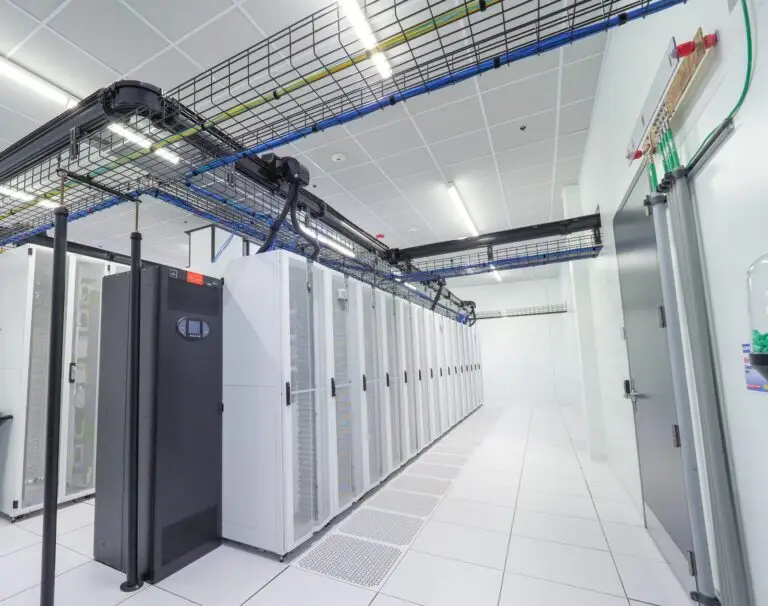
Xera is a Tier III, carrier-neutral colocation facility in Southeast Michigan, engineered around four fundamentals: power, connectivity, security, and scalability. That means concurrently maintainable infrastructure, redundant power and cooling paths, and the density to support demanding AI and high-performance computing workloads, all within a facility built for compliance-sensitive requirements. For organizations that want to control their own IT stack without carrying the cost and complexity of building a facility, it delivers the availability their operations depend on.
If you are weighing colocation options in the Detroit metro and want to talk through what your workloads actually need, reach out to our team for a walkthrough of the facility.